Fandom Gaze and Canon: When Stories Become Invisible
May 11th, 2026
「もちろん嘘の話だけれどね。世界の全ての物語がそうであるようにね。」
"It’s a bunch of lies, of course. All the stories in the world are so, aren’t they?"
- from Eiji Otsuka’s Wonderful Adventure of Lolita℃
Maybe none of this matters, but let me talk some shit.
I find myself with a simultaneous morbid fascination and repulsion for the idea of “canon” in fandom spaces and online talk. Well, I don’t really engage with fandom, I try to avoid it as much as possible. But among certain works/genres/mediums/scenes that are typically considered low-brow (entertainment adjacent), the “fandom gaze” model of engaging with art and literature has basically won, and the attitudes and way of talking about things spread around like a disease regardless. So it’s always that little annoying pebble in the shoe that keeps coming back, because there’s just so much latent anti-art sentiment oozing out of all this stuff.
All jokes about religion being a fandom aside, the most obvious place to start is where the concept of canon comes from. The meaning of canon as a prescribed set of scripture that is considered the true word of God is actually the closest to the way its used in fandoms today, but my claim is that this fandom canon worldview is virtually nonsensical, has no bearing on any useful meaning of the word canon, and even granted a semantic shift into some new meaning, this new meaning doesn’t resolve to anything substantial at all but a vague gesture towards an authority that doesn’t exist.
Another meaning of canon is as a body of work of a single author. Well this one is clearly not the fandom canon. Fandom gaze cares a lot more about IP/franchise than the authors, but regardless you can easily find counterexamples. Take the Gundam fandom for example, the original show is considered canon. Zeta, ZZ, etc. are canon. Works by other authors like Harutoshi Fukui (Gundam Unicorn) are canon. However, Gaia Gear, original Gundam author Yoshiyuki Tomino’s own work set in his same Universal Century setting is widely considered non-canon by fans because it is overruled by the power of the franchise (copyright owners.)
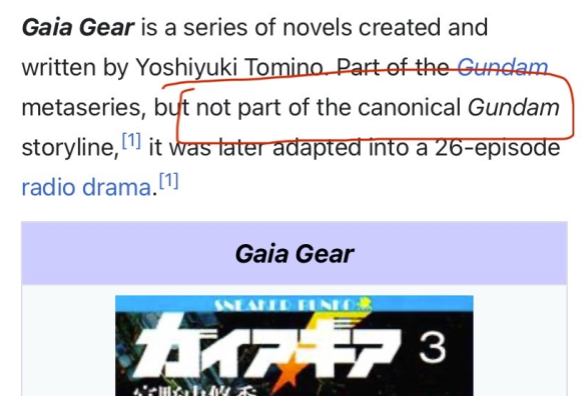
The citation here literally points to a random internet user's blog where they vaguely mention that Gaia Gear might be considered "black history," a term originating from Turn A Gundam that in this context refers to forgotten out of print Gundam works.
The fandom canon is also obviously not the canon in the sense of the “canon of western literature,” I’ll just cut to the point, what we talk about when we talk about “fandom canon” is actually a fictional history.
Fandoms are obsessed with fictional histories. The objective of fandoms seems to be to define the parameters of the fictional history as if it were a set of facts and timeline of events that actually happened. Canon is invoked to resolve discrepancies in a logistical timeline of events. What is most likely to make a work non-canon is if it presents facts that are contradictory or unrelated to the important canonical history of the work in question.
Furthermore, the concept of canon extends beyond just pointing to works, but facts and ideas themselves come with some degree of canonicity. You’ll hear statements like “this character canonically spoke German” or “this character is canonically Canadian” (God forbid the dreaded “canon ship.”) The word has come to be a stand in for indicating a historical factuality. To say a character canonically did X is really to say that in the history of events that we hold to believe really happened (in this fictional universe,) this character did X.
The fandom canonical history is especially rigid and does not allow for inconsistencies and contradictions, despite real world history as a discipline being essentially unable to function without historians accepting the ambiguities of what is not known. In real world history we accept there are multiple accounts of historical events and do our best to keep track of it all. That does not fly in fictional fandoms. There must be one true record and all else is apocryphal.
The most emblematic activity of canon-adherent fans is wiki editing. The obsessive cataloguing of data that can be considered factual. The wiki marks the results of every cutthroat canon argument had in every fandom across the web. The wiki is the one true record. The scripture, the word of God. The wiki can be believed more closely than the original text, because it has been filtered and worked over by the most devoted fans for years. A divine history more true than what we know about our own physical world.
Is it too obvious to say that none of these events ever actually happened? There never was a one year war, there never was a Gundam. Amuro Ray and Char Aznable are not real people who ever existed. So then canon is a form of make believe, just a fun secondary activity, a creative way to engage with a group of stories set in the same universe. I’m sure it started out as innocently as that, but it eventually found its way to the dogmatic form it has today, where people get at each others throats online arguing about what is canon or not canon. I would have hoped it would be needless to say this is an absurd way to engage with literature/art/storytelling, whatever you want to call it.
Let’s explore the Gundam example a little bit further because I think its a fascinating case study.
(Note: The word canon or close equivalent doesn’t really exist in Japanese language fandoms… sometimes the word “official” is used to mean more or less the same thing as perceived by fans in the English sphere though the connotations are quite different. A story considered official by the Japanese IP owner may be deemed non canon by English language fans. Appropriately, in Gundam discussions, terms like “official history” or “official timeline” are used fairly commonly in its place.)The main setting for Gundam stories, called Universal Century is mainly told through TV anime and novels. Most of the main works were directed by Tomino and most of the novels were written by him. The original story, Mobile Suit Gundam (MSG for short) was a 40 something episode TV anime. Then there was a novelization published concurrently with the TV show. Finally the TV show was re-edited and completed into a film trilogy. The essences of a fictional story are themes, feelings, ideas. The themes, feelings and ideas in these three different versions of Gundam are highly related, and your relationship to the work will only be enriched by exploring all three forms, especially the novels which are vastly different in content and expand upon the themes in ways that the animation does not. But here we run into an unresolvable problem for the fandom gaze. A problem that prohibits one from accepting any more than 1 of these three different versions. Contradictions, the great enemy of the canon faithful. All 3 forms portray different versions of the events, especially the novel version which offers a completely different timeline of events, and has main characters die who don’t die in the animation, thus making it also historically incompatible with the second Gundam story, Zeta Gundam (the MSG novels are historically incompatible with both the anime AND the novels of Zeta Gundam!)
This makes no fucking sense.
Then the canonical Gundam fan runs into more strife when they try to decide which version of the Zeta Gundam anime is canon, because one of them has an ending that prevents the third Gundam story ZZ Gundam from ever happening! Uh oh! Then you have the three different versions of the 4th story Char’s Counterattack, 1 movie and 2 different novelizations. One of these novelizations does historically lead into the next novel Hathaway’s Flash. But now we have big problems when we remember the film adaptation of Hathaway’s Flash. Is that one canon to the movie Char’s Countarattack or the book Beltorchika’s Children? Fuck me!
Sanctity = defended.
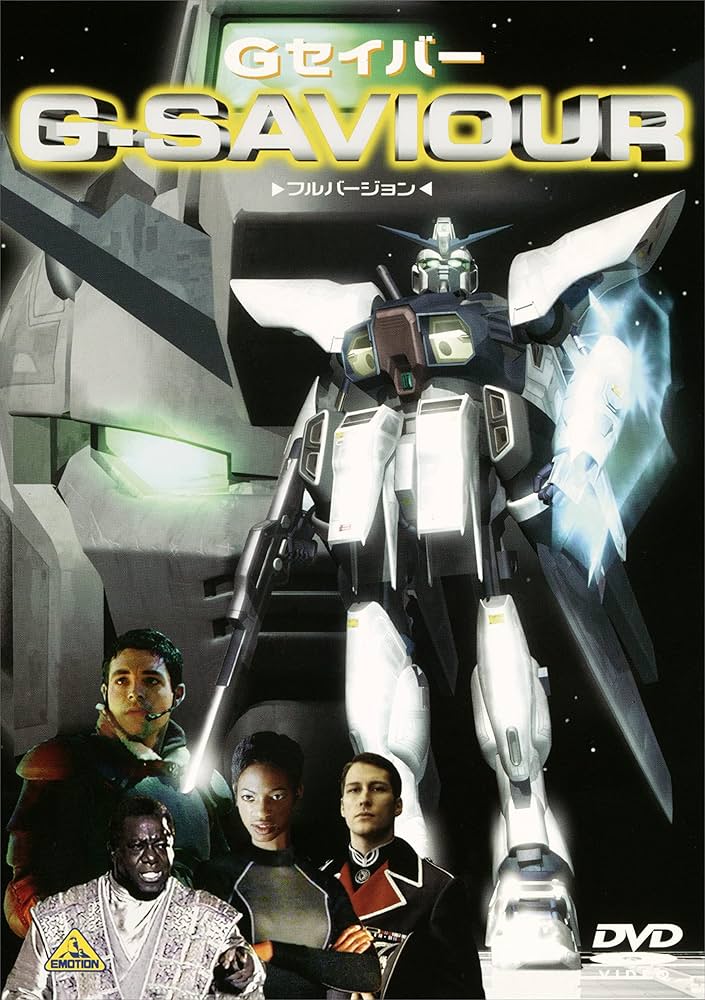
Gaia Gear (which in reality makes up a strong thematic trilogy with Char’s Counterattack and Hathaway’s Flash) is outright non-canon because it contradicts with a filmed-in-Vancouver live action movie that won’t be made for over a decade, so thank god we don’t have to figure out how the contradictory Gaia Gear radio drama fits into all this.
This tangled web all melts away when you remember these are all just fictional stories and can read them as you like, take from them what you like, forget wikis, forget explainer videos, forget the dogma of canon. Let yourself experience the joy of creativity and storytelling in its pure form for once.
But the fandom gaze won, and so many people seem to view storytelling (in entertainment adjacent spaces) in an absurd way. I can’t help but think that when you internalize this way of understanding stories that you must lose a large part of your ability to really read a story. It’s a large leap away from reading towards consumption. You consume the story to learn the truth of the canonical (historical) facts. You consume to “know the story” (= know the facts of the story.) You believe watching a franchise summary video is equivalent to reading the stories, prepping you to skip to the newest anticipated release in the franchise. The stories themselves are just bothersome, you only need the facts. You come to believe that lore videos on youtube are the only truth and become completely blind to the shape and essence of the story itself as it exists in itself. That is to say nothing of how “canon brain” affects the people creating the new installments of popular franchised entertainment in the first place. (Bloober Team hiring youtube video essayists as consultants for Silent Hill 2 Remake. Haha. Haha. AAAAAAAAAAHHHHH)
In a fandom gaze worldview, fan wikis become the story. The books, movies, games, whatever, just become delivery methods to fill out the wiki. More attention is given to the wikis and youtube explained videos than the story itself. The story dies.
Video games are an extreme example of how the fandom gaze makes stories invisible. Take for example the vast amount of brain power that is put into attempts to decode the canon truth of Dark Souls or Elden Ring every day. Thousands of hours of poring over wikis, game text extracts, theory based on theory based on youtube video. Filling out the wiki with the canonical historical truth of what happened. This approach totally loses sight of the reason why all of that material was put into the game in the first place, which is to be a game that you play. The vagueness of the bits and pieces of background you find here and there acting as catalysts to let your brain run wild with spontaneous interpretation and imagination.
You would think people used to video games, a medium where multiple contradictory endings is commonplace, would have a feel for this but it seems the opposite. Which ending of Silent Hill 2 is canon is really important to people for some reason. The historical record must be maintained. When it can’t be resolved cleanly it must be understood that there are multiple canon timelines! Very scientific.

Resident Evil, is it canon that Chris waited in the jail cell the whole game for Jill to rescue him or vice versa? Is it canon that Jill used the broken shotgun to exchange for the regular one or was she rescued from becoming a sandwich by Barry? Is the spencer mansion from the original PS1 game canon, or the one from the Gamecube remake? You don’t have to look very far to find people questioning if there even is any version of Resident Evil 1 that is canon yet, because now only the “remake universe” is canon so we need to wait for another remake of 1 before we can find out the historical truth. Is this not complete nonsense?
Stories are stories. It’s how human beings communicate with each other. If I tell a story from my life to 5 different people, the details will probably differ between tellings. Why should we expect more from fictional stories? What does it matter when the essence of the story is still there?
「ある種の真実は、嘘でしか語れないのだ。」
"There is a kind of truth that can only be told with lies."
- from Otaro Maijo’s The Childish Darkness
Okay, so the fandom gaze made stories invisible, that’s very sad. But I thought I’d finish off by talking about something positive, some better ways of looking at the relationship between fictional stories that exist together in some kind of shared world or idea space. And also an excuse for me to talk about some of the stuff I’ve been into lately.

Madara Official Fan Books
One of the most interesting fandom catalysts I’ve come across is Eiji Otsuka and Shou Tajima’s Mouryou Senki Madara series, which started with the first manga in 1987. Otsuka established a setting where the characters were to reincarnate 108 times throughout history, and provided direct examples of how the same characters are reconfigured into different settings and stories with followup manga like Basara and Madara Lasa, and openly embraced the fan works by collecting a bunch of them into a series of official fan books. (This should come as no surprise if you are familiar with Otsuka’s essay “A Theory of Narrative Consumption.”) With this kind of setting anyone can write their own Madara story and it is no less valid than the official published works. (Another similar example of this is the Baroque Instrumentality Project where the copyright for the video game Baroque was released to the public who could freely create Baroque works between 1999 and 2007, with some of these fan works being incorporated into the Ps2 remake.)
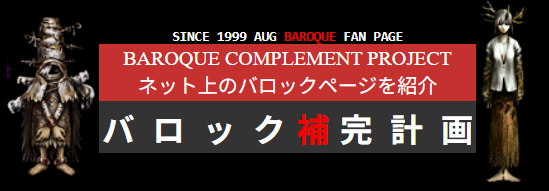
Fitting for a game with themes of embracing your "distorted delusions" (subjective perception of the world)

Various books featuring Elise Natsume
This extends beyond just Madara, but Otsuka and his wife, Yumi Shirakura’s characters continuously reappear in each other’s stories throughout their entire bodies of work in various incarnations. All of these works are deeply interconnected, and the more you explore the more your experience is enriched. Yet, it would be foolish to take this as some kind of “lore” or fictional history. It’s utterly incompatible with the canon worldview. It takes a form much more natural and familiar as literature. When Elise Natsume appears in Otsuka’s 『僕は天使の羽根を踏まない』 (I Won’t Step on Angel’s Wings) or Shirakura’s 『ミルナの禁忌』 (Mirna’s Taboo) or Shirakura’s 『ロリータの温度』 (Temperature of Lolita) you don’t take this as another chapter in the ongoing historical life events of the character, but rather this character brings with her some kind of essence, like a character of myth appearing in another tale. Some deep connection can be sensed between them by the reader, but it is something incapable of being captured on a wiki.
In the afterward of the third volume of the novel 『摩陀羅 天使篇』(Madara Angel Arc) Otsuka writes: (my translation)
“Whether the connection between my works have some deep meaning or none at all, I feel like all my works gradually converge into a single worldview.”

Kirin and Inuhiko (Then Seishinja) in Mouryou Senki Madara (1987, left) and MPD Psycho (1997-2016, right) before and after 108 reincarnations
In the afterward of MADARA MILLENNIUM (an unfinished novel about Madara characters Inuhiko and Kirin in their teenage years who have reincarnated into modern day Japan that was later completed as I Won’t Step on Angel’s Wings,) Otsuka writes: (my translation)
“A glimpse of what happens next to Detective Inuhiko and Kirin will be written about in the novel version of MPD Psycho. Surely those two are still ‘drifting’ around Shinjuku. As for Elise Natsume, another story will be told about her in Yumi Shirakura’s Mirna’s Taboo.”

Various books featuring Inuhiko and Kirin
Note the language used, how he’s talking about these characters as if they were the same people, directing you where to look to continue their stories. Yet these stories are completely incompatible and inconsistent, no sensible “lore” or timeline could ever be constructed between these works. Inuhiko and Kirin indeed appear in one of the MPD Psycho novels, specifically 『ロリータ℃の素敵な冒険』 (Wonderful Adventure of Lolita℃) co-written by Otsuka and Shirakura. There are at least 4 different works that portray Inuhiko and Kirin in modern day Japan, (Including the novel version and the manga version of MPD Psycho) and while they all feel like they fit together and you get the complete story from reading them all, they are absolutely not compatible as a single timeline of events. That is to say, if you tried to view the works of Otsuka and Shirakura with a worldview that believes in the concept of fandom canon, you would be unable to resolve meaning from any of this.
In the afterword of MPD Psycho REAL (a book containing an annotated screenplay of the Takashi Miike’s TV version of MPD Psycho, written by Otsuka, Shirakura and Gichi Otsuka) Otsuka writes: (my translation)
“By the way, for those who are only familiar with the comic and novel versions who haven't seen the TV version, I should say that it's not an adaptation but it's own work. At least in terms of "setting" it's an entirely different beast. That being said, whatever consistency exists between the settings of the manga, novel and TV versions is absolutely none of my concern. Being unable to see a work with anything but that kind of wiki-like interest is such a sadness.”
(Note: he does not say wiki specifically, the word he uses is 謎本的 referring to pre-internet unofficial fan theory books, the sentiment stands and is the clearest way to express it here in English)
You can see similar treatments in the works of people like Mamoru Oshii or Goichi Suda, where characters and concepts appear and reappear in completely far-flung contexts and disparate settings, the more you explore the more clear the picture becomes and the more enriched your reading experience, in a way that has very little care for logical consistency of “lore.” I’m not as familiar yet only having read three of his books, but Otaro Maijo presents a fascinating example because in his case it extends beyond only his own works into Ryusui Seiryouin’s JDC Series and even Jojo’s Bizarre Adventure get tied up in his mad world eventually down the line (I’m sure Jojo wikis will be sure to warn you that Jorge Joestar is NOT CANON. WATCH OUT! DO NOT READ IT! IT NEVER HAPPENED!) But an interesting case study is his first two novels. Mainly the second, The Childish Darkness, a novel that confronts you aggressively with the question of how truth can be derived from a story at all. I would dare anyone to read his first two books and be able to make any sort of statement of what is canon.
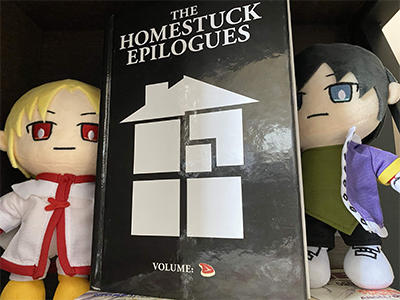
Epilogues.
Another place for further reading is the brilliant Homestuck Epilogues, which presents the concept of canon as a tangible force inside the narrative of the novel itself that can be entered and exited, and serves as an exploration of some ideas that may be adjacent with this article.
At the end of the day, stories, literature, art, whatever, its all creativity. There are no rules. You can do whatever you want. You can make your body of works have a detailed rigid historical timeline, it’s fine. But by no means should that be our default approach to engaging with a story.
Let’s all let go of our fandom gaze, drop canon from our vocabularies and see stories in their full brilliant hues.
I don't see canon anywhere, Otsdarva.